The Distributed Muscle Platform

We are
bringing back
the Quetzalcoatlus.

As a machine.
Zero rare-earth magnets Zero pressurized hydraulics Responds like muscle

To make it fly, we have to build something robotics still does not have: lightweight, distributed, fault-tolerant muscle.
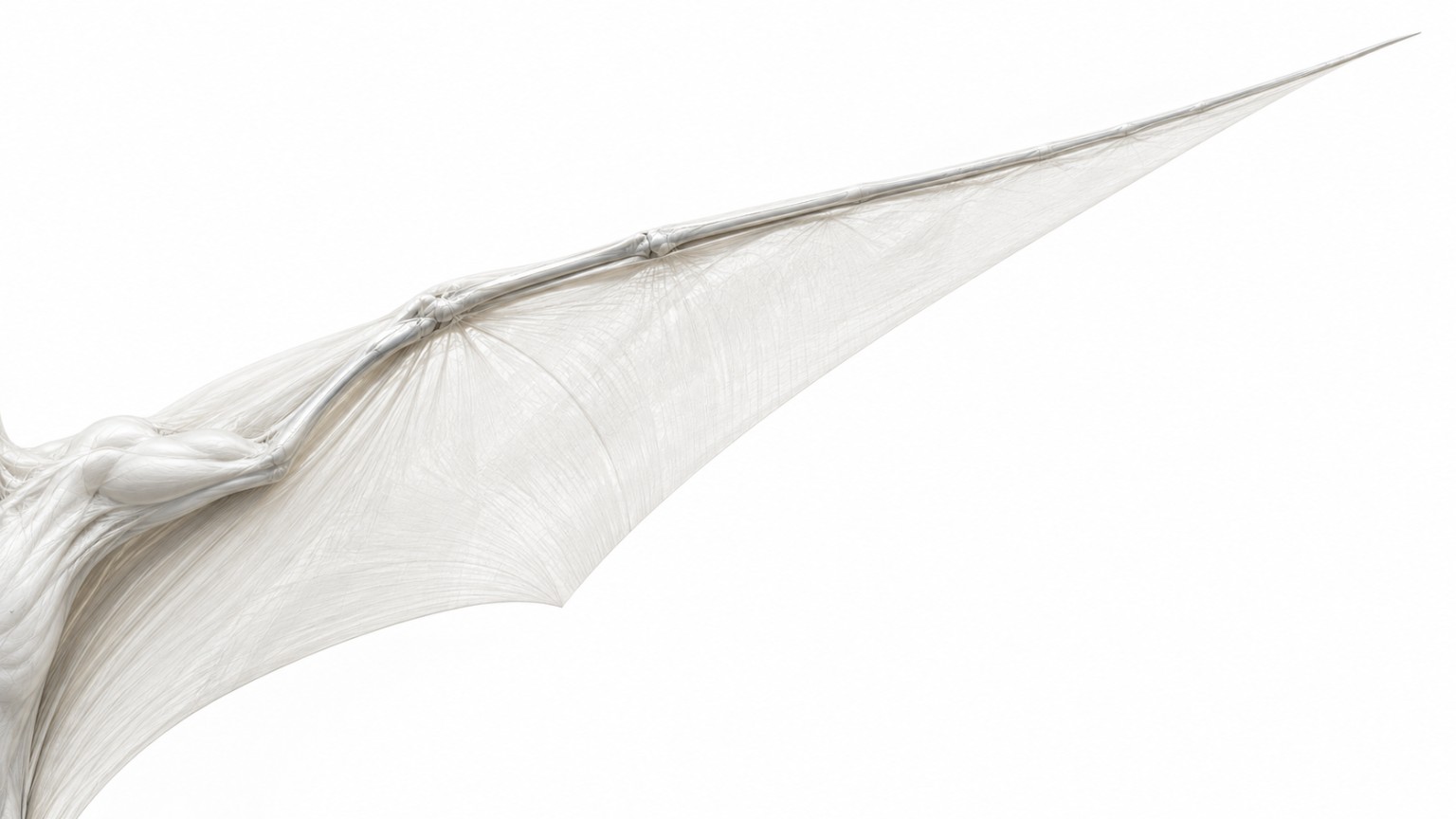
Robotic Quetzalcoatlus wing
Why this animal

Nature already solved this.

Quetzalcoatlus was not just the largest flying animal that ever lived. It solved one of engineering's hardest problems: getting a body the size of a small aircraft off the ground under its own power, with no runway, no engine, and no rare-earth magnet anywhere in it.

Then it was interrupted. An asteroid ended the experiment 66 million years ago, mid-run. Nothing since, no animal, no aircraft, no robot, has replicated muscle-powered flight at that scale.

Reproduce the system that made this possible and you have solved a problem much larger than flight.

10-11 m
Wingspan
200-250 kg
Estimated mass
No runway
Launched from land
Powered
Flapping flight
The limitation

We can build the wings.

We can build the skeleton.

We can build the computers.

We can build the batteries.


We still cannot build the muscles.

Every robot on Earth still concentrates force, mass, and failure into a handful of motorized or hydraulic joints. 66M builds the alternative: force generated by thousands of contractile fibers, aggregated through a shared tendon, with a control system that detects a failed fiber and redistributes its load across the rest.

Why now

A supply-chain chokepoint, not a robotics problem.

The muscle a pterosaur needs is the same muscle robotics needs today, and the magnets it replaces are running into a wall.

120k t

Global rare-earth magnet demand by 2030, rising to 175k tonnes by 2050.

94%

Share of sintered NdFeB production concentrated in a single foreign supply chain, up from roughly 50% two decades ago.

2027

FY2021 NDAA prohibition on foreign-import magnets in US defense systems takes effect.

Electric vehicles

114k tonnes NdFeB by 2030
90 to 100% of battery and hybrid traction motors.

Wind energy

13k+ tonnes rare earths by 2030
Direct-drive turbines raise magnet intensity per megawatt.

Humanoid robots

3.5 to 4kg per unit, about 2x an EV
Small today. The fastest-growing new demand, across 20 to 50 actuators per machine.

Defense

Strategic, not volume
Aircraft, UAVs, missiles, submarines.
The flight programs

No one has flown like this. Yet.

Two flight programs sit on the same platform: an uncrewed Pteranodon-class demonstrator in the nearer term, and a full-scale Quetzalcoatlus as the long-term proof. We aren't selling seats or preorders yet, that comes after each demonstrator flies. Join the flight list to follow both programs.

Free. No deposit. No payment. First access, and updates as the platform and both demonstrator programs develop.